Today
Generate a replenishment plan: 4 airport and type rows fall below required stock, first FRA AKE on Friday
Why: proposals appear once a plan is generated. Approved stacks and requested leases stay as they are.
▶ Generate plan
ARC Solutions / ARC ULD
ULD leasing and ULD management
One platform for ULD lessors and for airlines that run their own ULD fleet. Lessors manage every lease from quote to invoice. Airlines forecast stock at every airport, plan the repositioning of empties and keep track of units out with forwarders, with paperless handovers on the ramp. Every day, the Today screen lists each task with the last day to act on it, most important first.
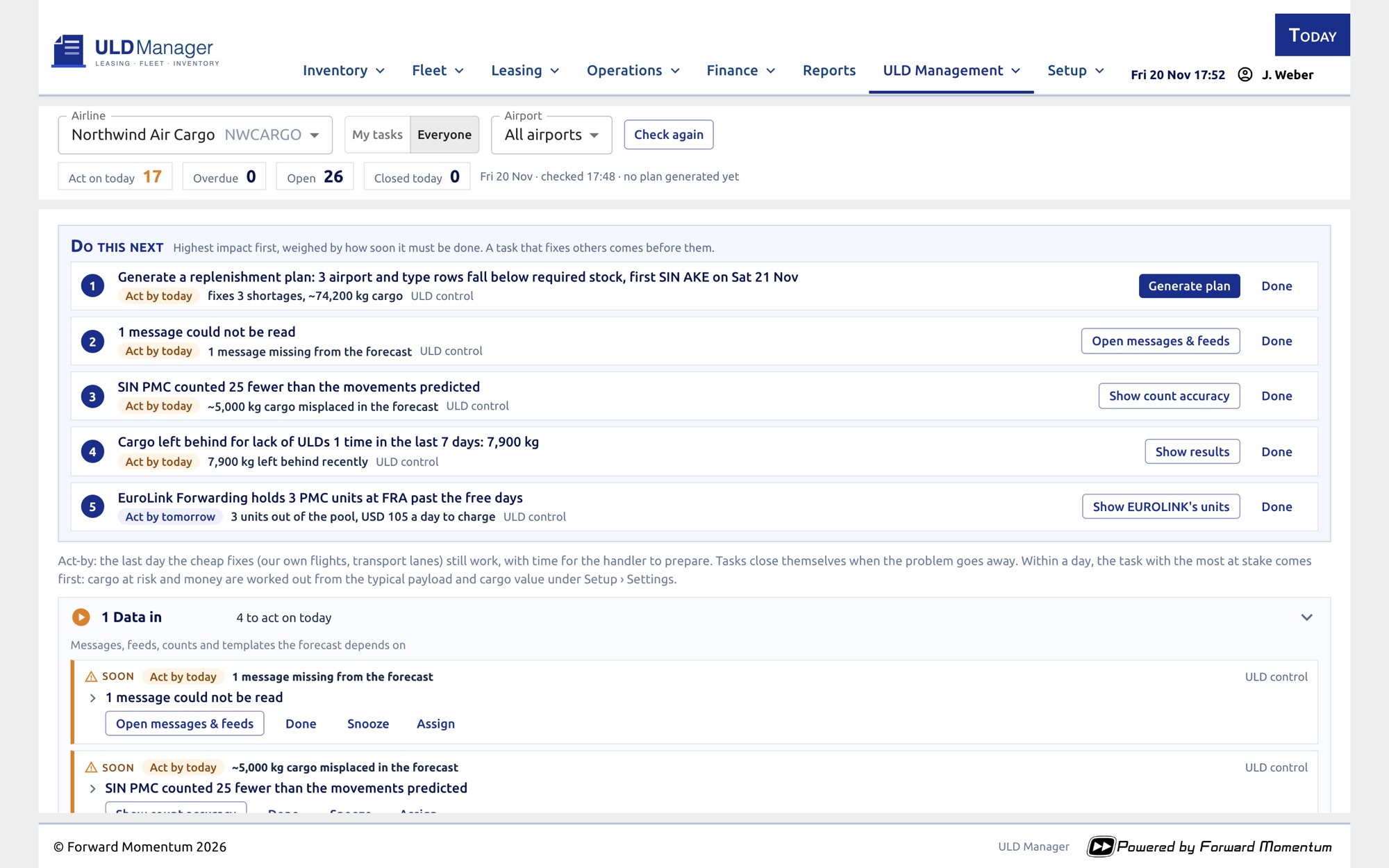
Today
ARC ULD checks the forecast, the plan, the message feeds and every unit out with a partner, and turns each problem into one task. Tasks follow the order of the day: data in, plan, moves, custody and closing the day. Each one says why it matters, what is at stake and the last day to act, and offers one action.
Today
Why: proposals appear once a plan is generated. Approved stacks and requested leases stay as they are.
▶ Generate planToday
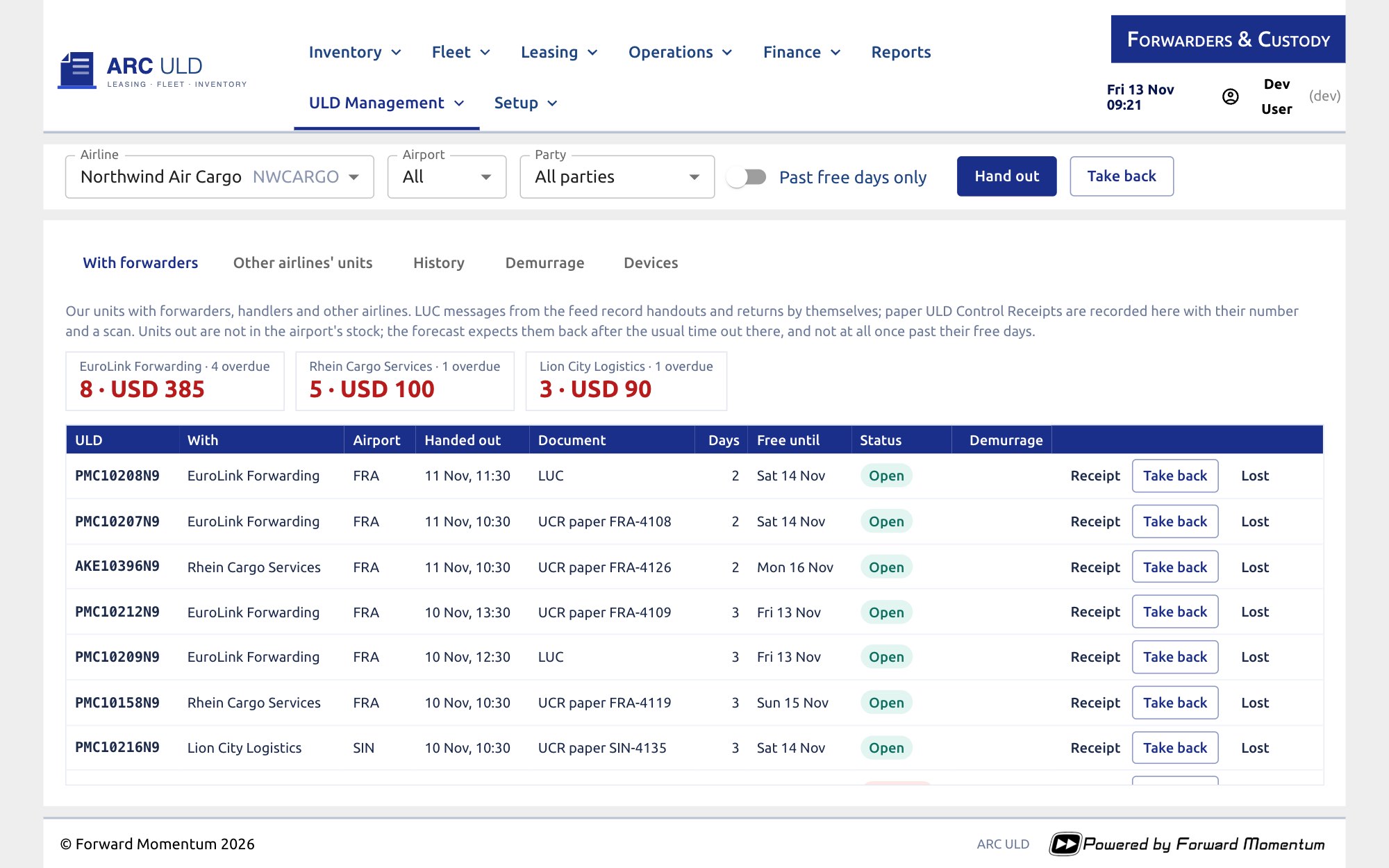
Why: demurrage so far USD 385, growing USD 140 a day. The forecast no longer counts on these units coming back.
Show their units →When you can
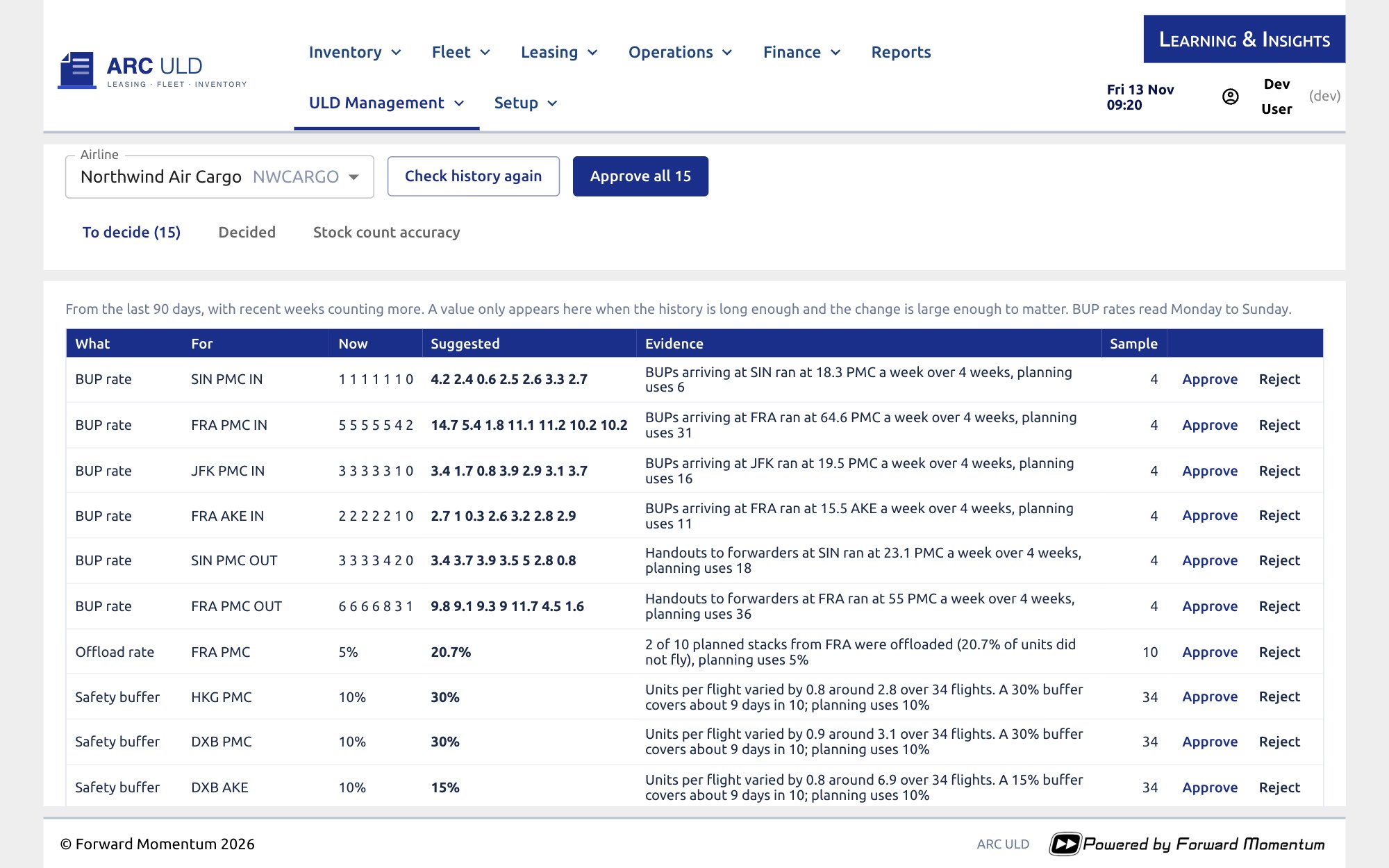
Why: the last 90 days show different BUP, offload and safety buffer values from the ones planning uses.
Review suggestions →Examples from the demo airline.
Learning & Insights
ARC ULD compares the values planning uses with the last 90 days of what actually happened, with recent weeks counting more. When the gap is big enough to matter, it suggests a new value with the evidence and the sample size. Nothing changes until your ULD manager approves it.
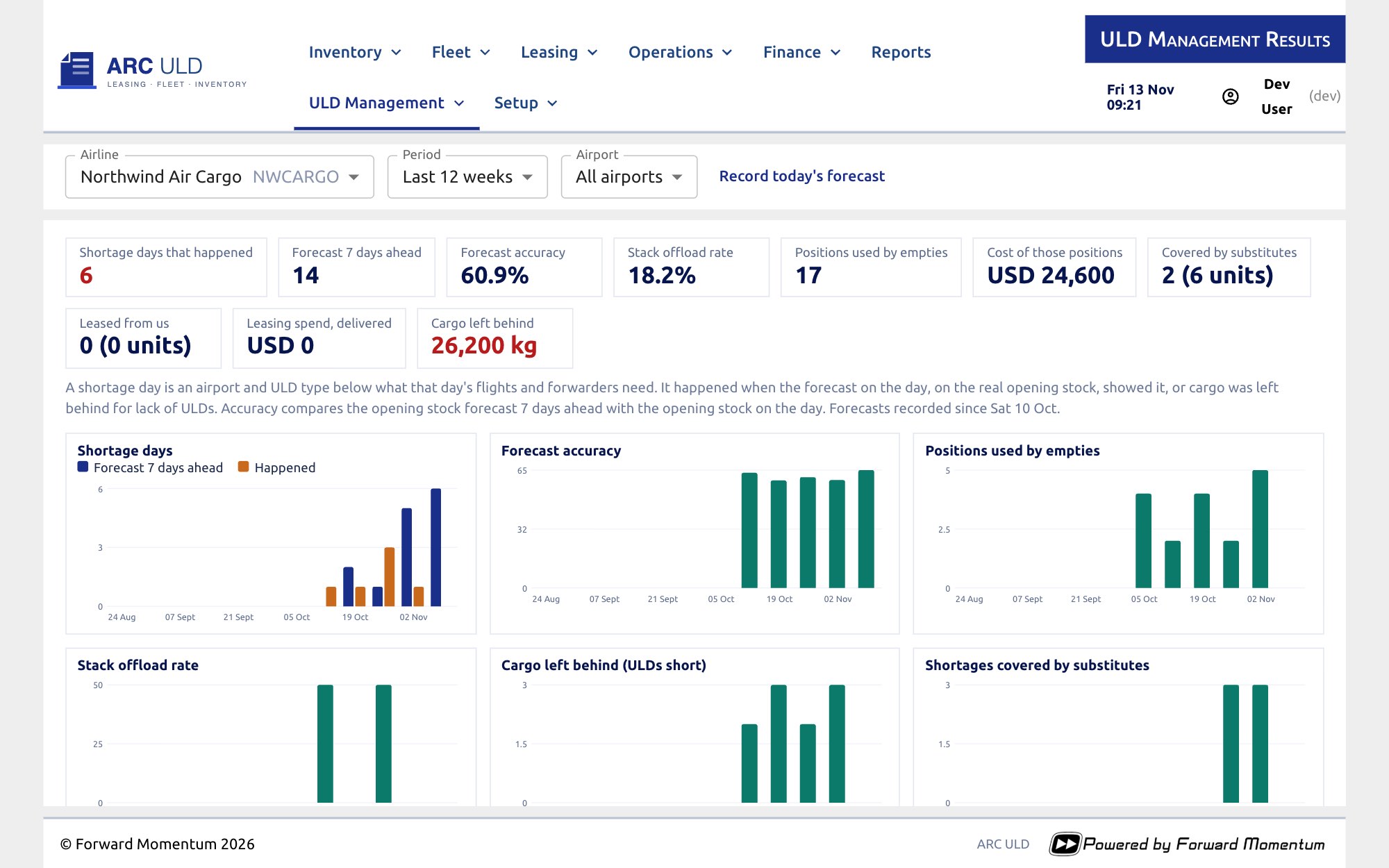
The Results screen shows whether it is working: shortage days forecast against those that happened, forecast accuracy 7 days ahead, positions used by empties and their cost, and cargo left behind.
For airlines
Keep every airport stocked for the flights ahead, without flying more empties than you need.
Opening stock for each airport and ULD type, day by day, from flight templates, build-up rates, stacks in the plan and units due back from partners. A unit that flies out counts again only once its cycle time says it is usable.
Stacks of empties, load changes and lease lines proposed to cover each shortage, using substitute types and collapsible units, re-planned every night with optional auto-approval.
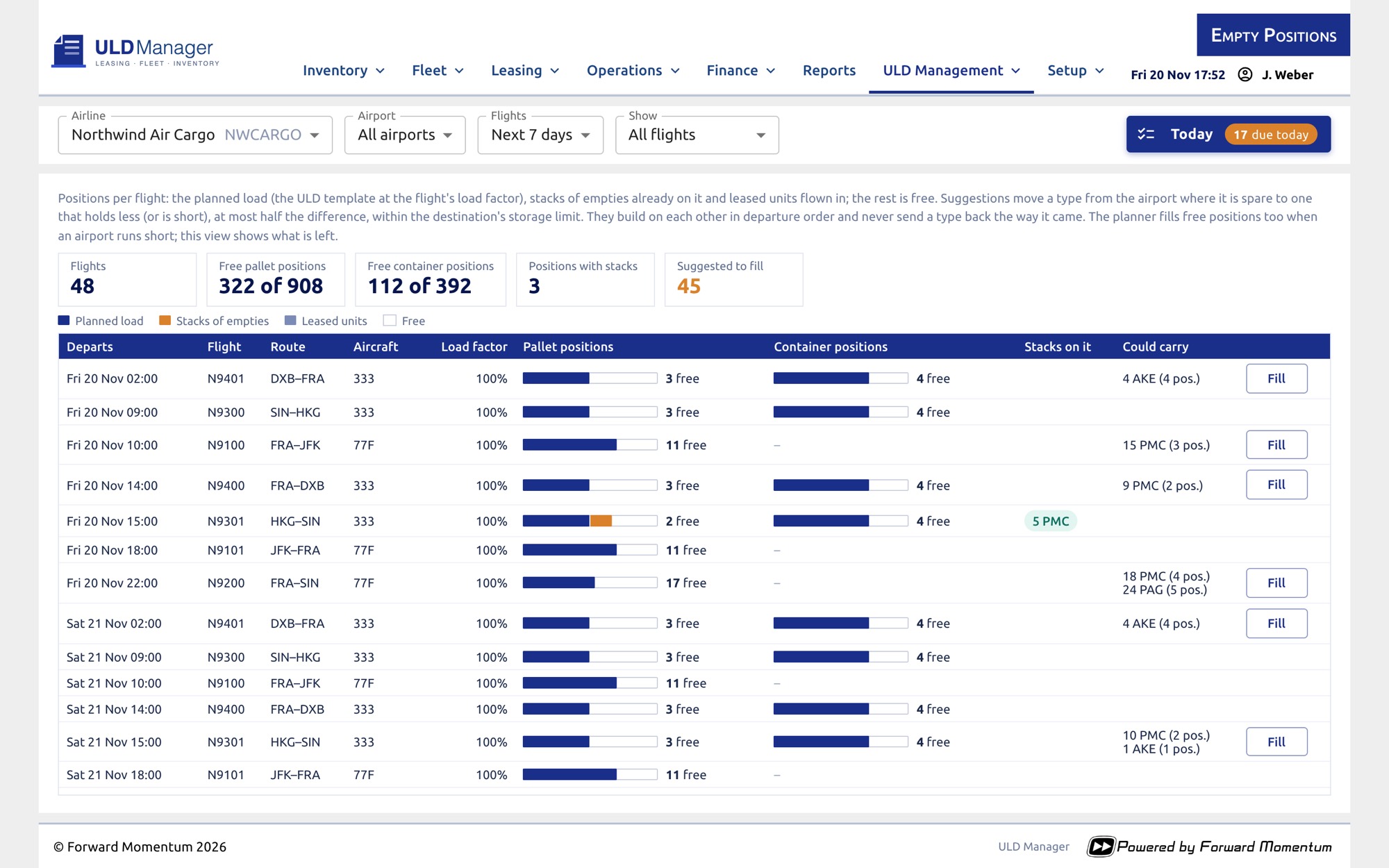
Free positions on upcoming flights, with stacks of empties suggested to fill them where they even out stock, never past the destination's storage limit.
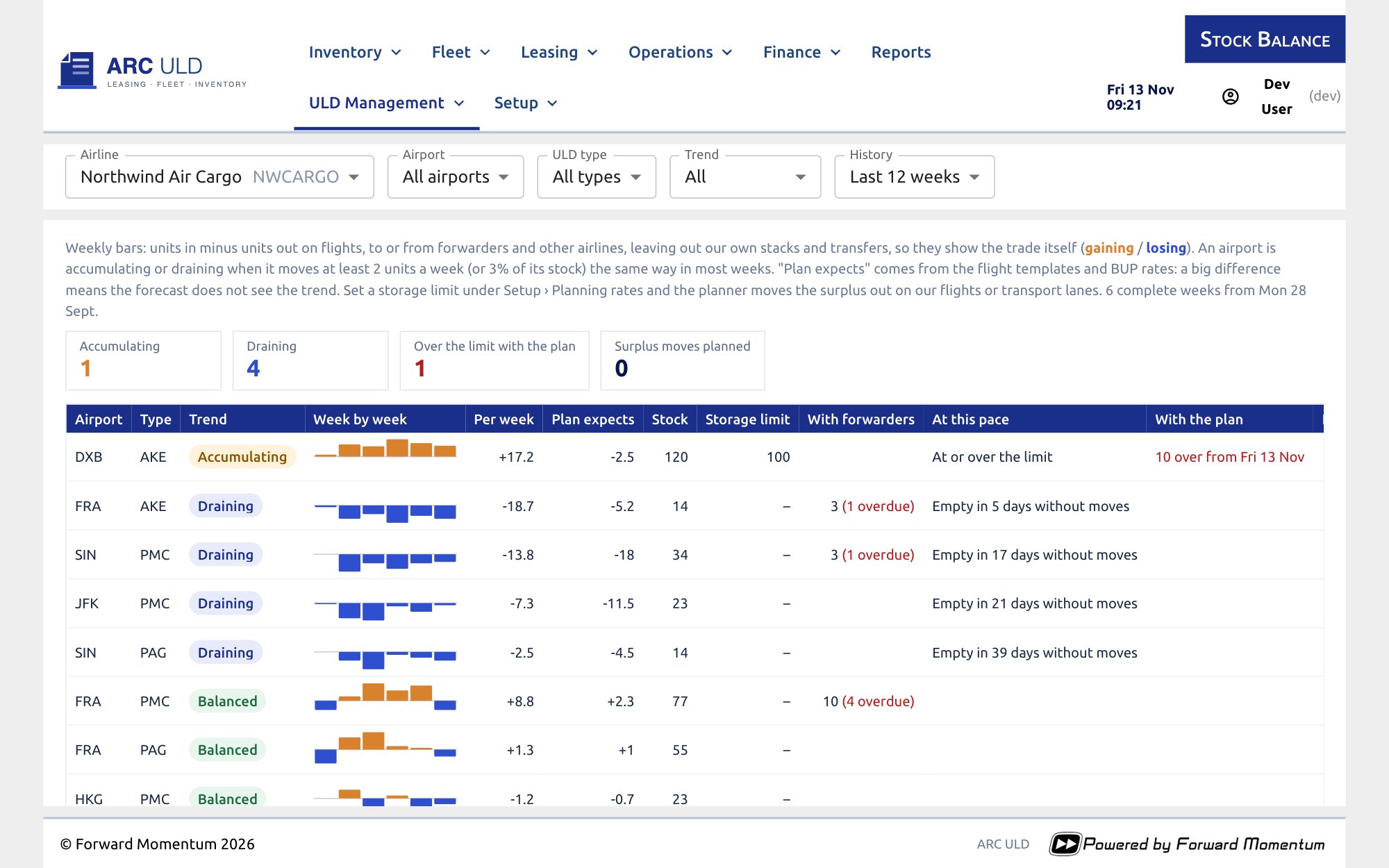
Which airports gain or lose units week by week, storage limits, and surplus moved out by your own flights, truck, sea or partner airline.
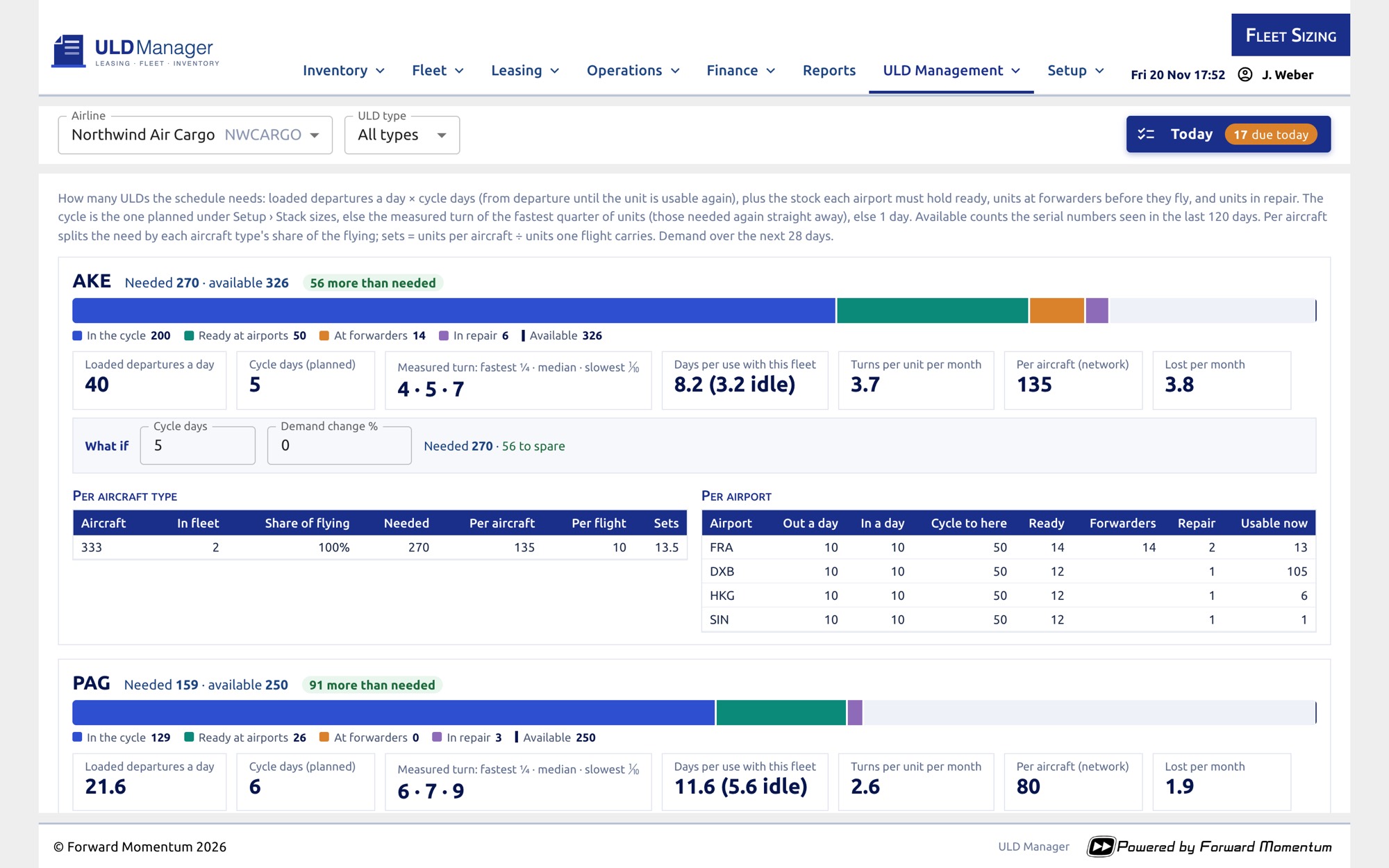
How many units of each type the schedule needs, in the cycle, at forwarders, in repair and on the ground, against how many you own and per aircraft, with what-ifs.
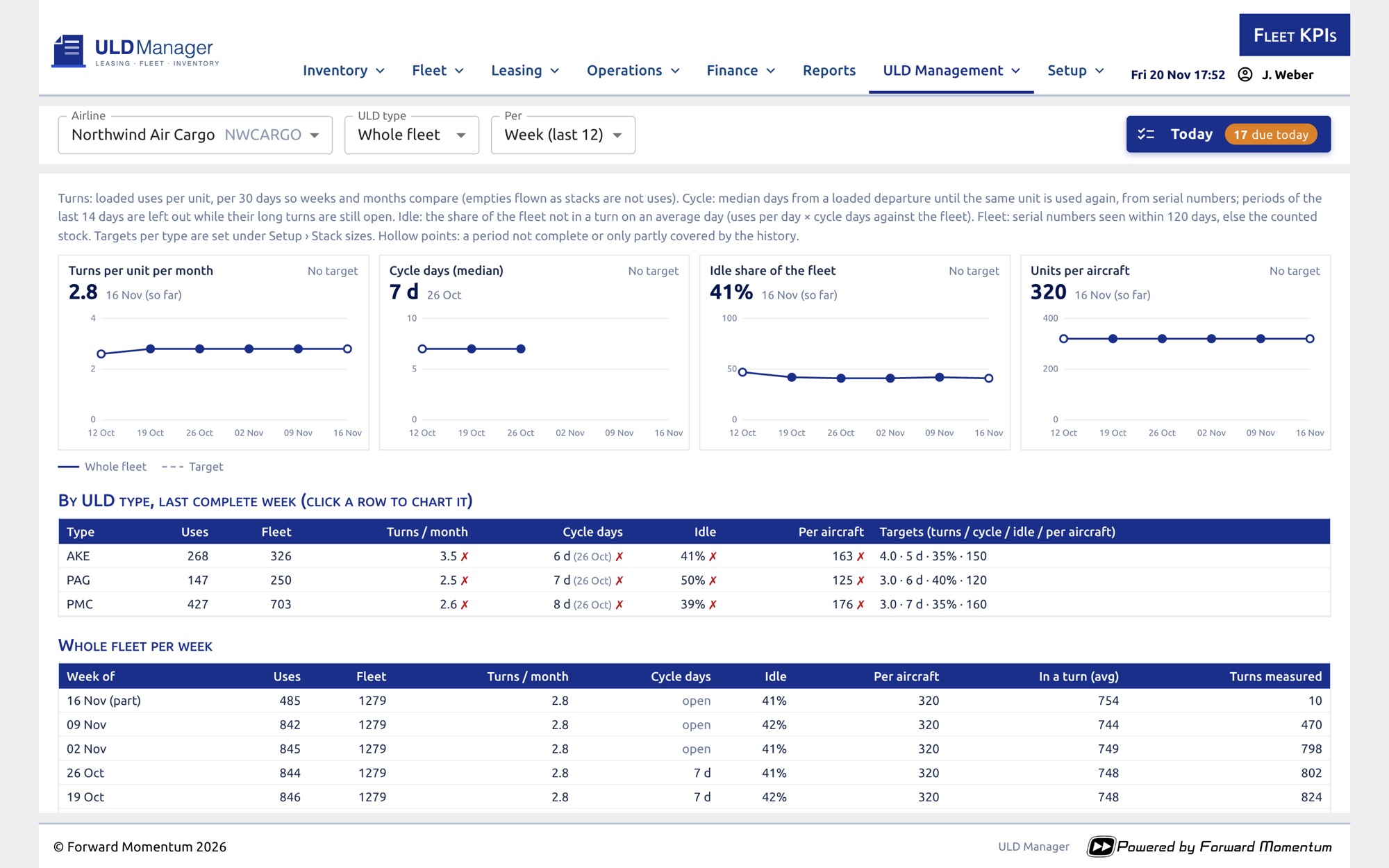
Turns per unit per month, cycle days, idle share and units per aircraft, week by week or month by month against your targets.
Handovers to forwarders, handlers and other airlines from the ramp handover, LUC, UCR or XUCR messages, or paper ULD Control Receipts, with free days and demurrage tracked per party and ready to invoice.
Signals from ULD tracking devices received through an API, with geofences, and checked against who should be holding each unit. If you choose, a device seen at a forwarder records the handover by itself.
Flights per unit against the average for its type, so the least used units go on the next stack and wear evens out.
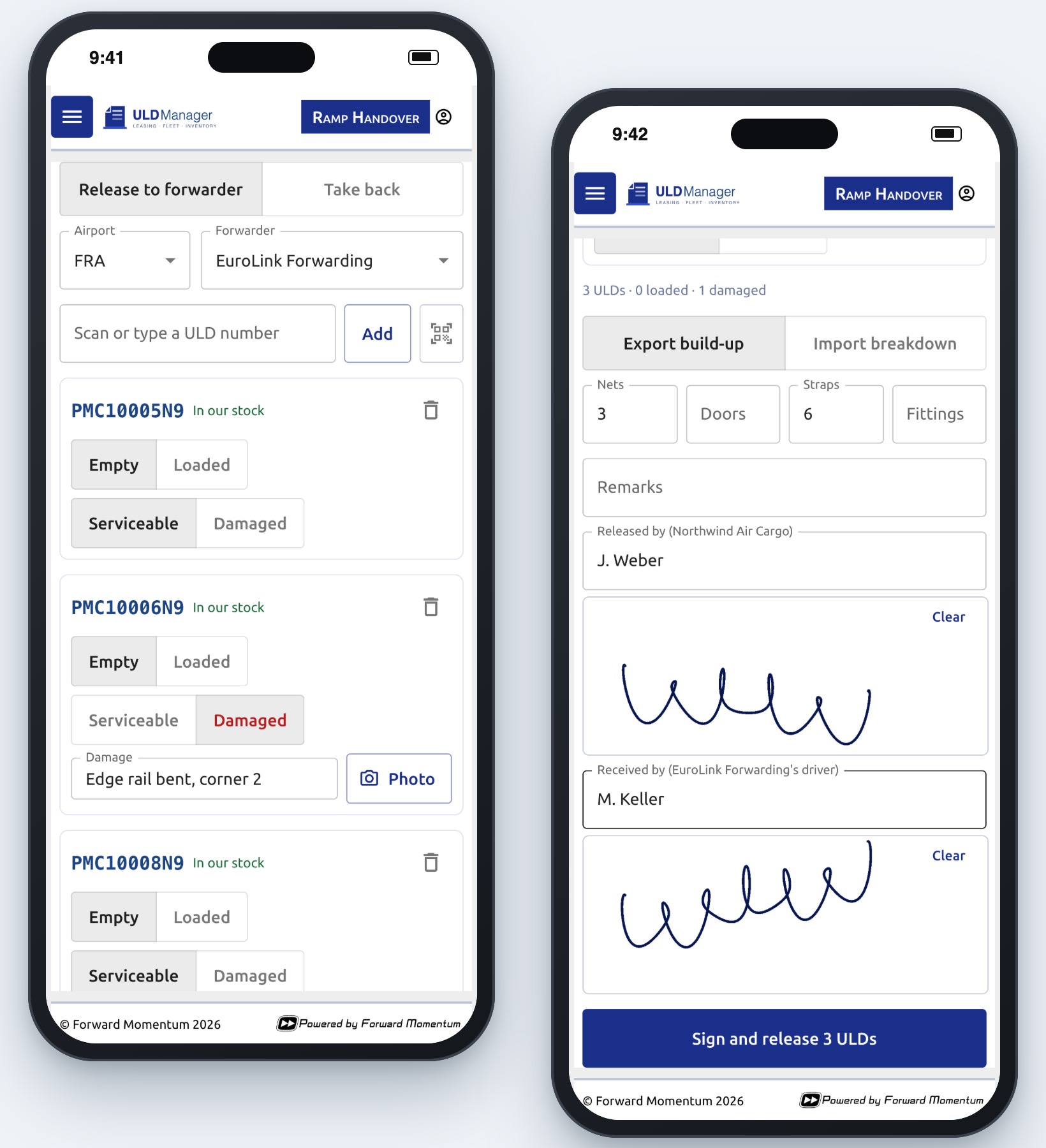
Ramp handover
Airline or handling staff release ULDs to a forwarder, or take them back, on a mobile device at the ramp. Release and acceptance are the same moment: both sides sign on the screen, and the receipt is numbered and sent straight away.
For ULD lessors
The whole lease, from quote and contract through dispatch, tracking and return to invoice and payment.
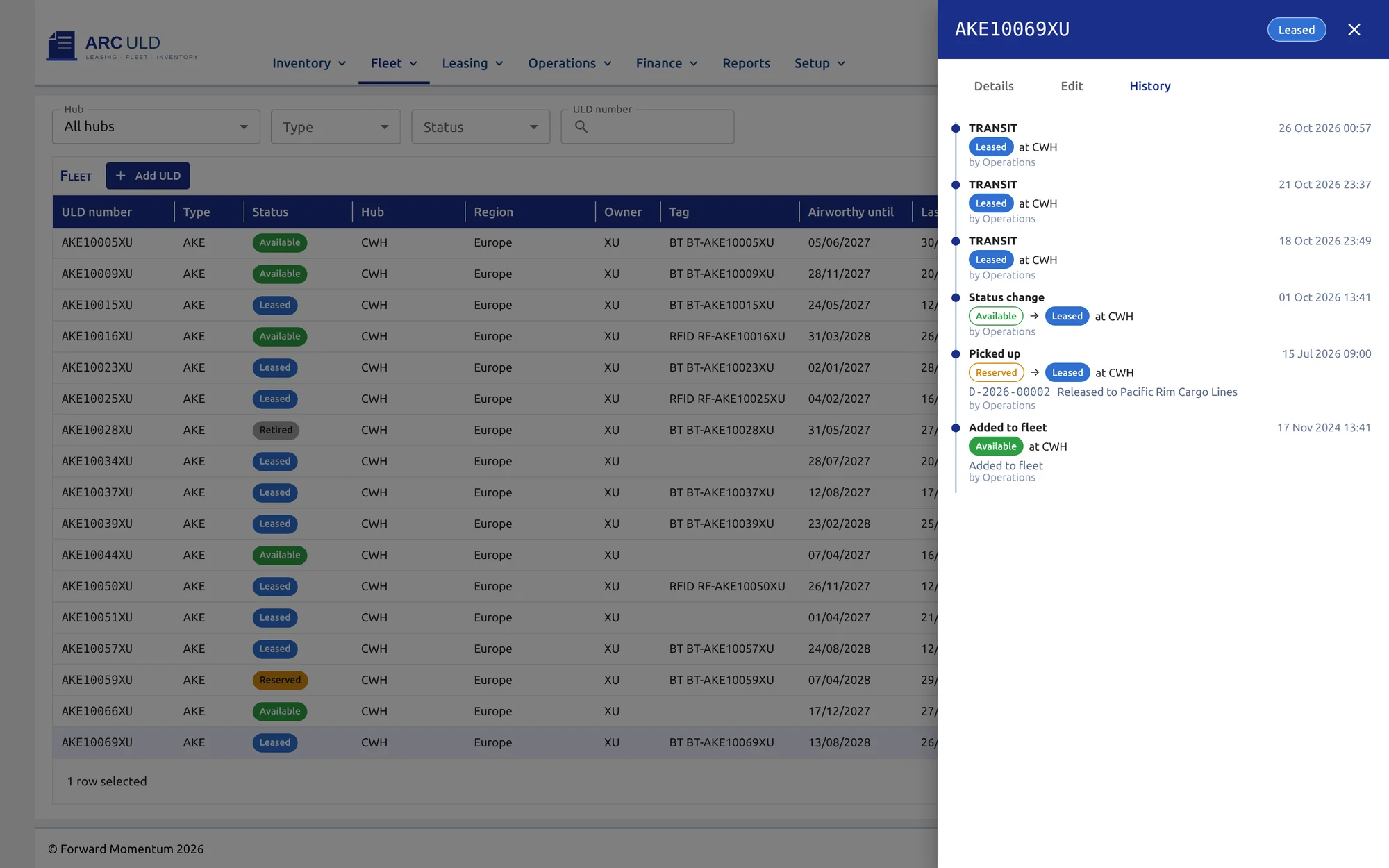
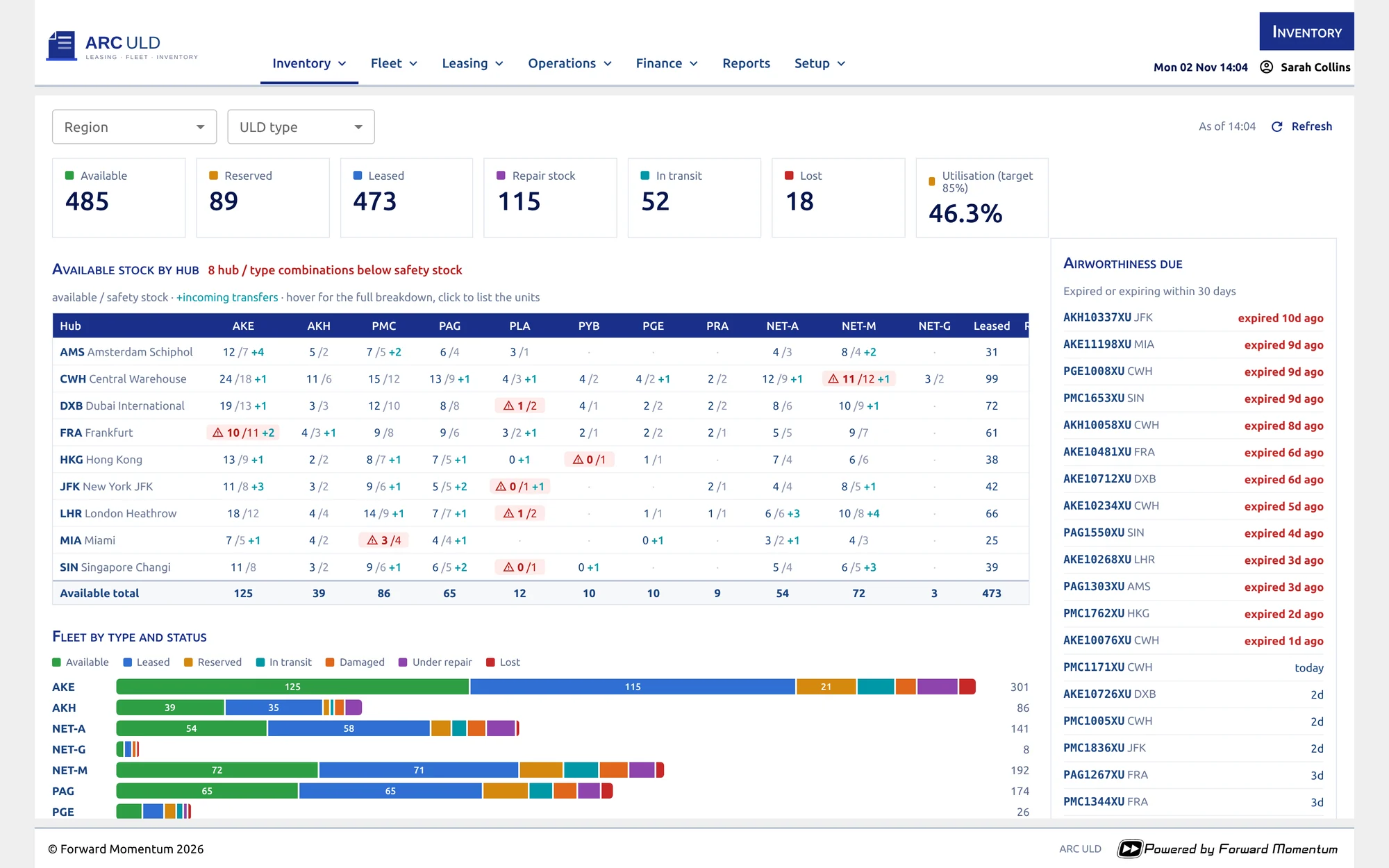
Every ULD by type, hub and status, with stock at each hub shown against safety levels, airworthiness due dates and transfers between hubs.
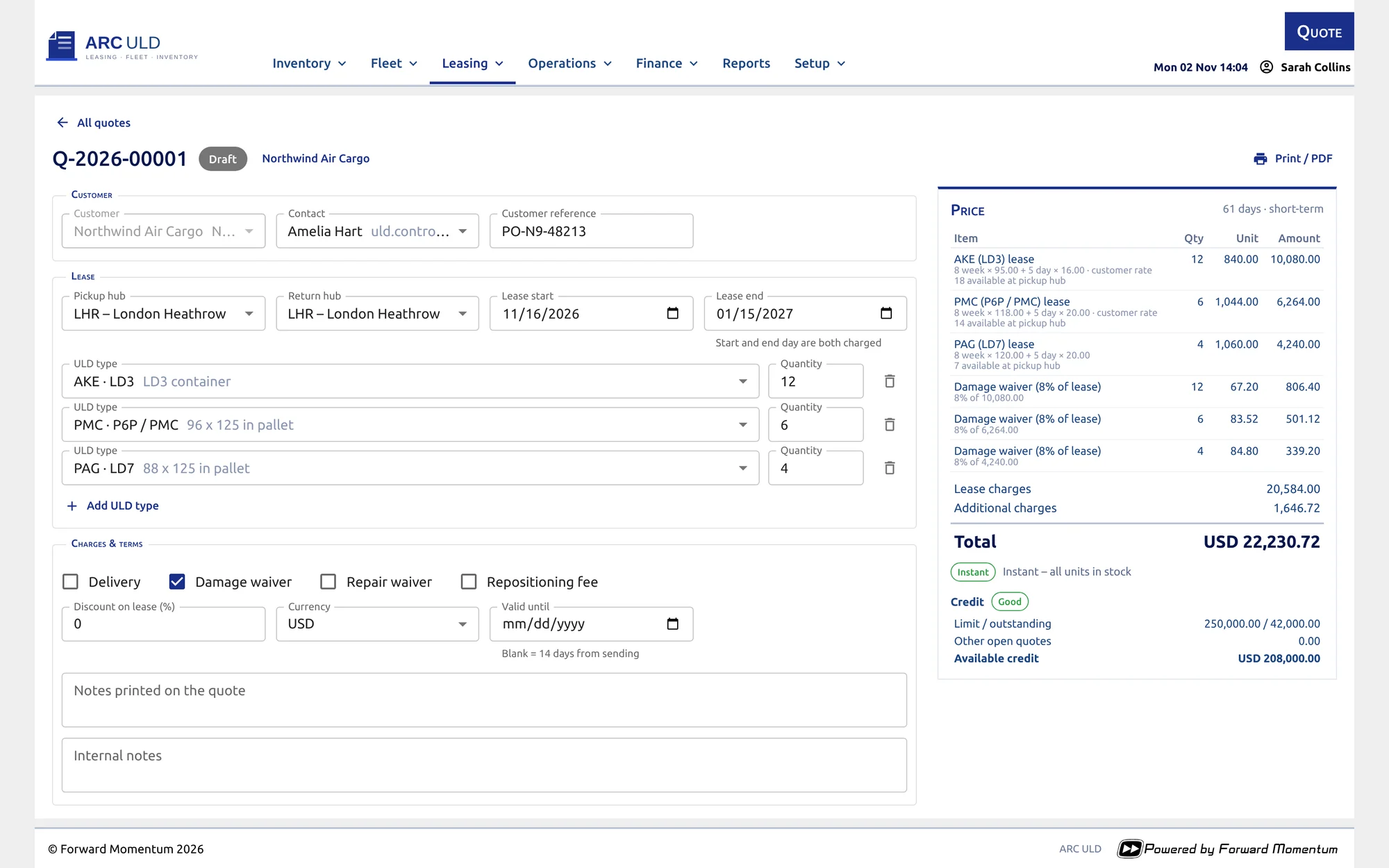
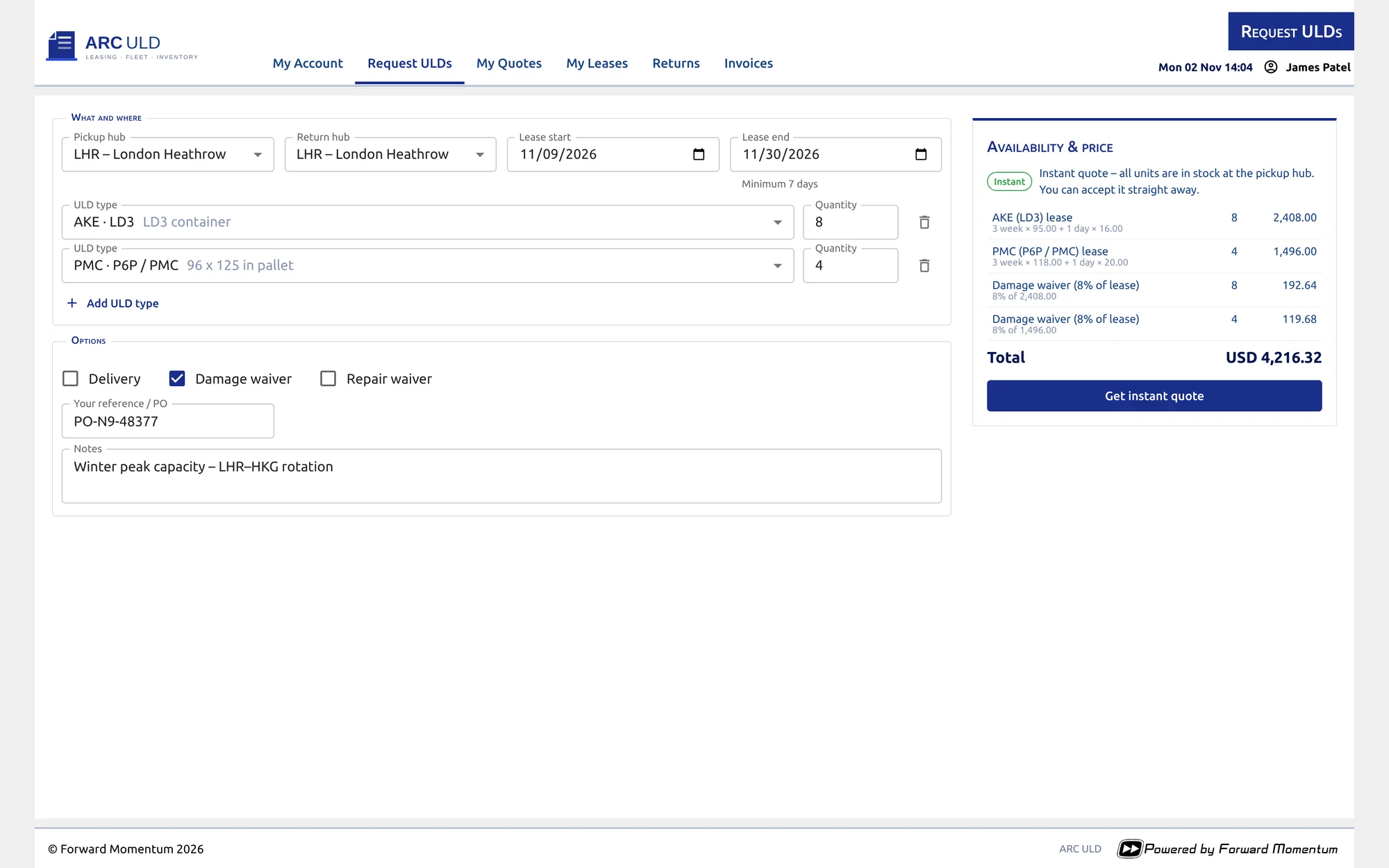
Live pricing for short-term (7 days to 6 months) and long-term leases, using customer or list rates, one-way fees, availability and a credit check before approval.
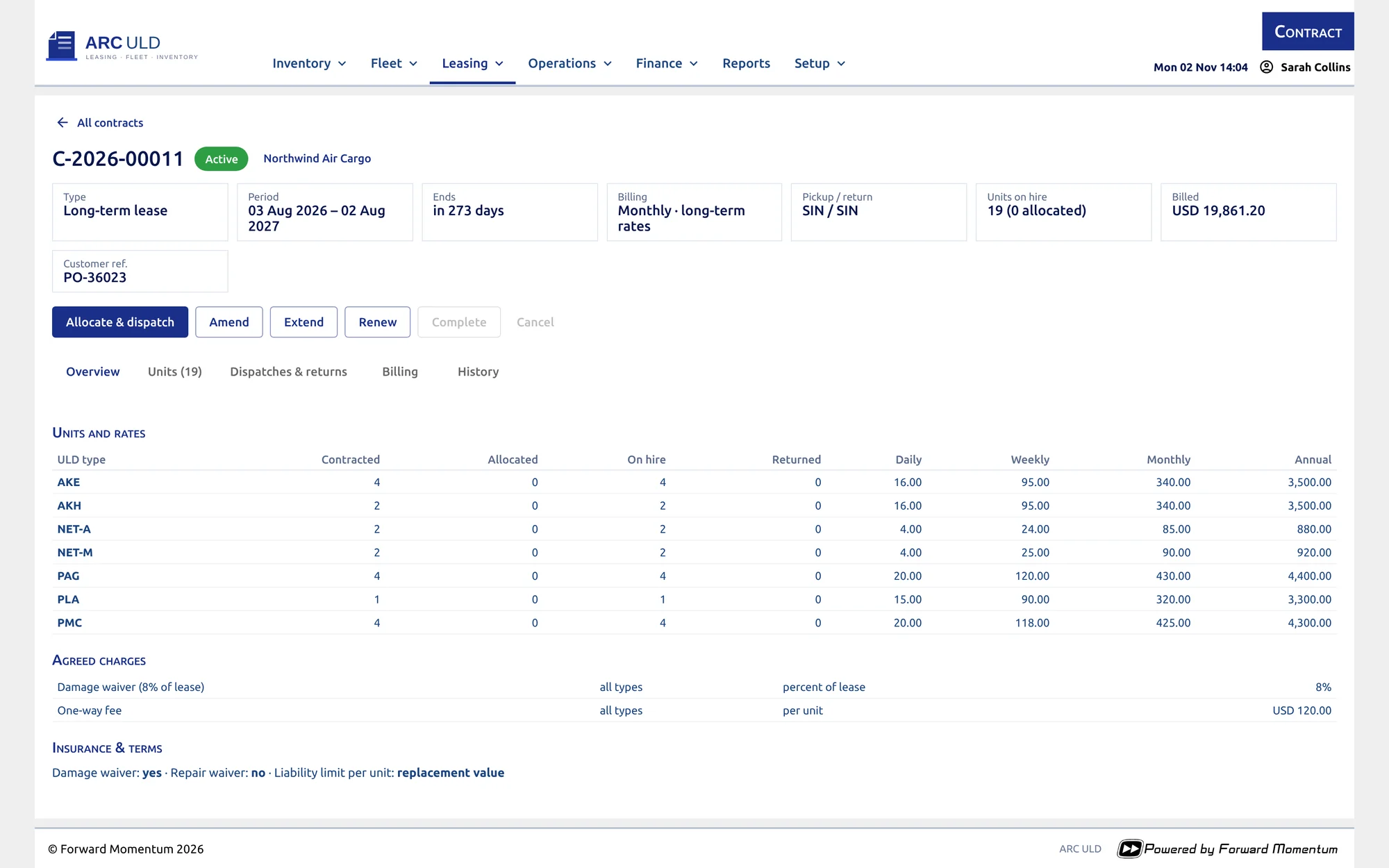
Contracts and framework agreements created from accepted quotes, then amended, extended, renewed, cancelled or completed, with full history.
Units reserved at the release hub, with the closest stock elsewhere proposed as a transfer. Pick lists, release notes and handover receipts for each dispatch.
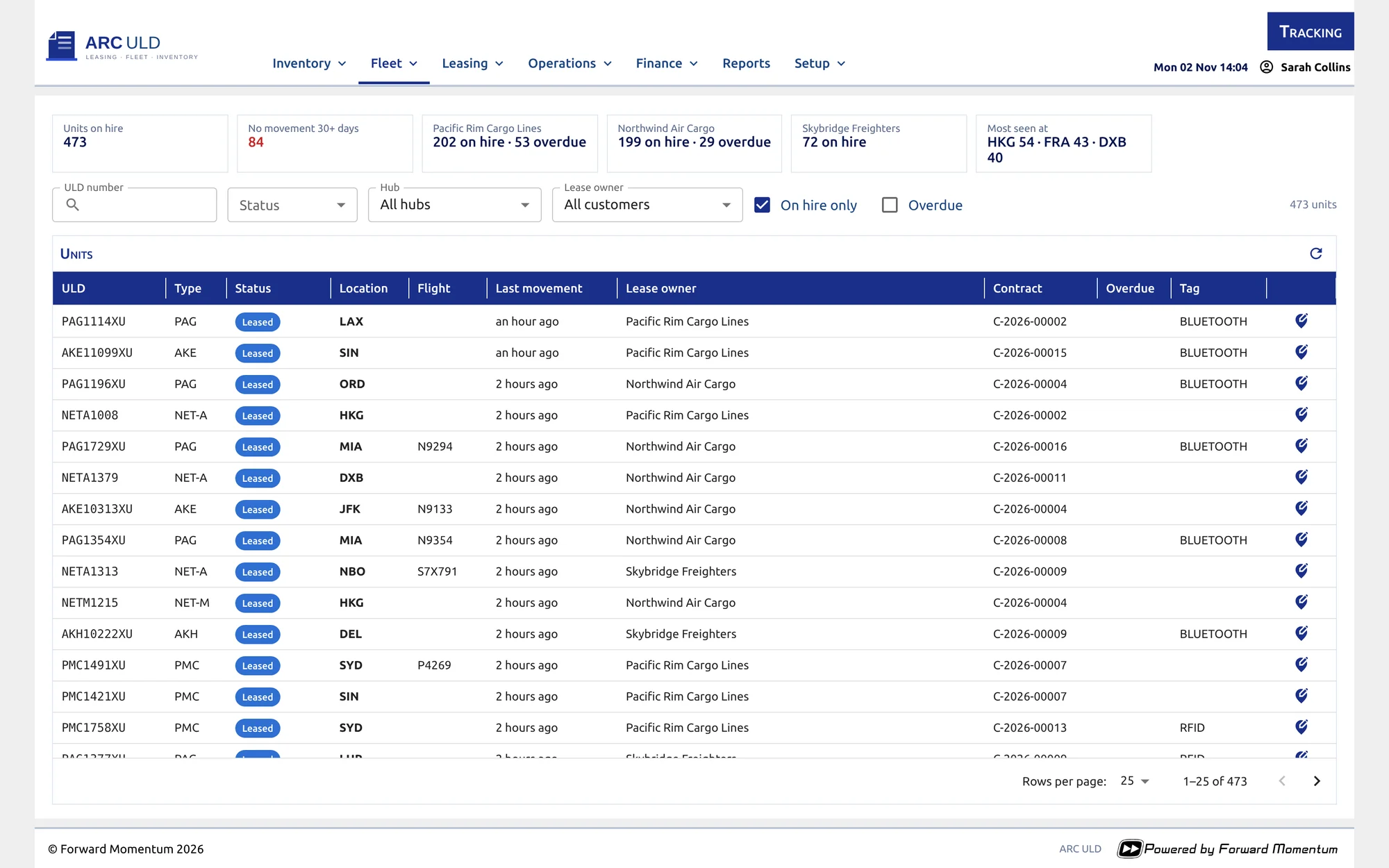
UCM, SCM, CPM, LUC, MUC and UCR messages update where every unit is, alongside manual updates, to reduce lost ULDs.
Condition captured on return, with photos. Damage and missing nets open a repair case, and liability is worked out from the contract's waivers and limits.
Screens
Screens from the application, shown with demo data. Click any screen to see it full size.
Augmented by AI
AI does the reading, checking and spotting. Your team makes the decisions.
Expected demand at each hub, with repositioning suggested before stock falls below safety levels.
Return photos assessed to suggest the damage category and likely repair, ready for staff to confirm.
IATA messages that do not follow the standard layout are still read and matched to the right units.
Units that have stopped moving or gone quiet are flagged before they become lost.
Billing runs straight from contract terms and actual days on hire, so invoices are right first time. Customers serve themselves, and management sees how the fleet earns.